The Weakest Points: Mapping Where Trouble Finds Your House First
After two decades of walking into damaged homes across the country, we have noticed something our clients often find surprising: destruction is not random. Water, fire, and mold follow predictable paths, and they almost always start in the same handful of places. The layout of the typical American home — basement below, mechanicals tucked in closets, appliances plumbed into walls — creates a kind of internal geography of risk. If you know the map, you can stay ahead of the disaster.
What follows is that map, drawn from our own restoration case files. Walk your house with it in hand.
The Basement: Where Water Goes to Collect
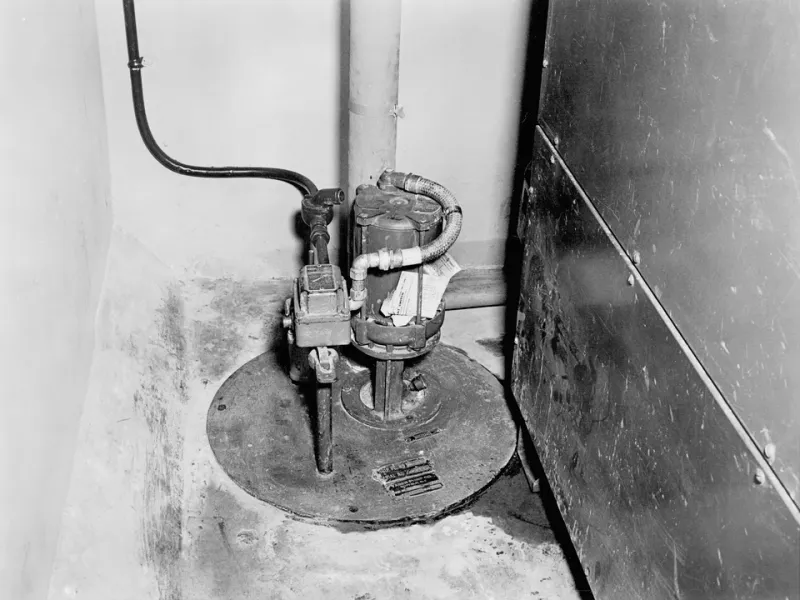
Gravity guarantees that the lowest level of your home becomes the collection point for every plumbing failure, every sump pump outage, and every spring thaw. In our flood recovery case studies, basements and crawl spaces appear in the vast majority of water losses.
The usual suspects: water heaters nearing the end of their service life, washing machine hoses that crack without warning, and sump pumps that fail precisely when the storm knocks out the power. A water heater tank that is more than ten years old is living on borrowed time, and it rarely announces the fact.
What to check: Rust at the base of the water heater, bulging or brittle washer hoses, a sump pump with no battery backup, and any musty odor that lingers even after the space dries out.
The Utility Closet: The Smallest Room, The Biggest Losses
That cramped closet holding your furnace and air handler is easy to forget — until a condensate line clogs and quietly dumps water onto the floor every time the air conditioner runs. Slow, repeated leaks in mechanical closets are among the most common sources of hidden mold we encounter. The damage is often discovered only when flooring buckles or a smell develops, sometimes a full season after the leak began.
What to check: Water staining on the closet floor, a condensate drain line that has never been flushed, and insulation around the unit that appears damp or discolored.
The Kitchen: Where Water and Heat Converge
The kitchen combines nearly every risk factor in one room: supply lines to the dishwasher and refrigerator ice maker, a garbage disposal with a habit of leaking at the connections, and a cooktop that produces open flame or high heat beside cabinetry and curtains. Refrigerator supply lines deserve special mention — a quarter-inch line that lets go can release hundreds of gallons while you are at work.
What to check: Water under the sink cabinet, warping near the dishwasher kick plate, a crimped or kinked ice maker line, and grease buildup near the range hood.
The Bathrooms: Small Rooms, High Failure Rate
Bathrooms concentrate water in ways no other room does. Toilets with worn wax rings seep into subflooring invisibly. Shower pans fail beneath tile that looks perfectly intact. Grout lines crack, and every shower sends a little water into the wall cavity behind them. Because bathrooms sit on the same plumbing stack, a leak in an upstairs bath routinely announces itself as a ceiling stain in the room below.
What to check: Loose toilets that rock slightly underfoot, soft spots near the tub, discolored grout, and any ceiling stain downstairs directly beneath a bathroom.
The Laundry Room: The Appliance Nobody Watches
Washing machine failures are among the most sudden and dramatic water losses we respond to. A burst supply hose can discharge at full household pressure — roughly 650 gallons per hour — and most homeowners are not in the room when it happens.
What to check: Replace rubber hoses with braided stainless steel, confirm the drain standpipe is not overflowing during the spin cycle, and look for rust streaks on the machine floor.
The Attic: Fire and Mold's Favorite Hiding Place
Upstairs, the risks change character. Attics are where electrical fires begin — aging wiring, junction boxes buried under insulation, and bathroom exhaust fans venting into the attic instead of outdoors, dumping warm moist air into a cold space. That trapped moisture condenses on roof sheathing and feeds attic mold, which spreads undetected for years.
What to check: Darkened or matted insulation, water trails on rafters, exhaust ducts that simply end in the attic, and any scorch marks near wiring penetrations.
The Garage: The Transitional Risk Zone
Garages store the things that start fires — gasoline, paint thinner, propane tanks for the grill — often beside the water heater's pilot light. They are also the most common entry point for wind-driven rain during hurricanes and severe storms across the Gulf Coast, Florida, and the Carolinas.
What to check: Flammable storage near the water heater, weatherstripping on the garage door, and grading outside that slopes toward the slab.
Your Printable Risk Map
To put this into practice, sketch your home's floor plan on a single sheet of paper and mark these ten checkpoints:
- Water heater and its age
- Sump pump and backup power
- Washing machine hoses
- Under every sink
- Toilet bases and shower pans
- Refrigerator and dishwasher supply lines
- Furnace and condensate line
- Attic insulation and exhaust vents
- Electrical panel and junction boxes
- Exterior drainage and gutter downspouts
Inspect the water-related items twice a year — we suggest the change to and from daylight saving time as a natural reminder. Check the fire and electrical items annually.
Damage rarely announces itself. It accumulates in the corners of the house nobody visits. The homeowners who avoid catastrophic losses are not lucky; they are simply the ones who looked first. If your own walk-through turns up something concerning — a stain, a smell, a soft spot — a professional assessment costs far less than the restoration that follows neglect.